
David Gregory talks to Eugene Robinson and Roger Simon about the elephant in the room...the fact that we have a black president. Liberals give the President way too much credit because of his skin color and conservatives are the polar opposite. How we can deal with racial issues if we cant even talk about them open and honestly. Here is a transcript that covers a good open discussion of race without the help of peanut boy. The complete URL is
http://www.msnbc.msn.com/id/3032608/#32936285We are back, joined now by Eugene Robinson of The Washington Post and Roger Selman -- Simon.
Welcome to both of you. A lot to talk about, certainly.
Gene, the president made news in this interview in a few different areas. One is he pointedly disagreed with Jimmy Carter on the question of race. It's clear the, the White House does not want to have that conversation about race. But you'd like to, and you wrote about it this week. And the title of the column is "Jimmy Carter Did Us All A Favor." You wrote in part, "It seems clear to me that some -- but not an `overwhelming portion,' as [Jimmy] Carter claimed -- of the `intensely demonstrated animosity' toward Obama is indeed `based on the fact that he is a black man.' ... Of course it's possible to reject Obama's policies and philosophy without being racist. But there's a particular nasty edge to the most vitriolic attacks -- a rejection not of Obama's programs but of his legitimacy as president. ... I'm talking about the crazy `birthers.' I'm talking about the nitwits who arrive at protest rallies bearing racially offensive caricatures ... idiots who toss around words like `socialism' to make Obama seem alien and even more dangerous. ... I look forward to the day when we can look past race. But before we can do so, we need to look at race and see it clearly. Jimmy Carter did us a favor." And yet the president says that this topic of race is like catnip for those of us in the media.
Yeah. What -- well, what newspaper or Web site does Jimmy Carter report for? I mean, he's a former president, he's not the media. He brought this up. And
I'm glad that he did, because I do think there is an edge to the criticism that is related to race. And I don't think it's the totality of the, of the attacks on Obama. The country is concerned about the economy, about -- over government spending, the -- legitimately concerned about a lot of things. But this question of legitimacy, the question that, that somehow he doesn't deserve to be there and it's, it's -- you know, we had this wonderful kind of warm national feeling in January during the inauguration, and I think there is, there is a core, a nut, a, a group on the far right, but wherever you want to put them on the spectrum, that has difficulty accepting him as president.
But Bush faced questions of legitimacy, Clinton faced questions of legitimacy as well.
They did. But, you know, it was, it was a little different. For, for those on the left, once we got past the question of, of Bush v. Gore and the Supreme Court decision...
There are a lot of people who never got past it.
Well, well some people never got past it, but relatively few. I think, I think for the, for the majority on the left it, it, it became more of, "I can't believe people voted for this guy."
Hm.
And "I can't believe they voted for him again," rather than "This guy does not have the right to occupy the Oval Office because there's something illegitimate about, about him as president."
Roger, you wrote in a column on Friday, you know, "Extreme feelings can be based on other things than race. People can act rudely and not be racists."
Yeah. And, and, and one of the few times I think I disagree with Gene. I, I think it is important to talk about race, and there's certainly racism out there. I think Jimmy Carter did it in the wrong way. I think it was not a teachable moment, it was an in-your-face moment. Jimmy Carter apparently believes if something is worth stating, it's worth overstating. When Barack Obama campaigned for president, he talked about his days of campaigning for the Senate in Illinois and would go down to southern Illinois, white, conservative, sometimes hostile; he didn't begin his speeches by saying, "The overwhelming majority of you are racists, but here's my plans for education, health care and the environment." He would say, "Look, here's who I am. Here's my plans for health care and education and the environment. Together, you and I can build a better future for ourselves and our children." And some people went away from those speeches thinking, "Well, this guy isn't a bad guy. Maybe, maybe I should go for this guy." That's a teachable moment. You can win people over. Some people you can't win over. Maybe the birthers you can never win over. Some of the crazies with disgusting signs you can't win over. But to simply despise people and to dismiss them as all a bunch of racists does not crate a helpful atmosphere in this country or one where you genuinely can heal the wounds, which I think is what we're talking about.
Final thought on this?
Yeah, my thought is we're not that far apart in that I don't believe that all the critics are racist. I do believe, however, that it is in the interest of the legitimate and honorable critics of the president to, to distance themselves from those who are not. And it may be a small group, I hope it's, I hope it's a tiny, a vanishingly small group, but it's there. And, and, and I, I, I think we do ourselves a disservice and do the country a disservice if we ignore it.
There's another portion of this interview having to do with the role of government as the fuel for this opposition, and I want to play that portion from the president again, because I think it's important. Watch this.
I think you actually put your finger on what this argument's really about, and it's an argument that's gone on for the history of this republic. And that is what's the right role of government? How do we balance freedom with our need to look after one another?
And, Roger, it seems to me that the president is in a position where he's got to sort of own the argument on government being the solution. Is he doing a good enough job of selling government as the solution at a time -- you think back to the Bush administration, competence, effectiveness in government was huge.
Now, I, I think what the president is addressing is a, is a, is a theme, is a movement that started or was encapsulated by Ronald Reagan, who taught us all that big government is bad. It is necessarily bad. The most dangerous words in the English language is "I'm from the government and I'm here to help you." That's the opposite of what Barack Obama believes. He believes big problems require big government solutions, that government can be a positive force, a force for good. That is who he is. And if he can't sell that, then he cannot sell his presidency.
I, I agree. And, and I think -- what I think the White House has not done a good enough job at is, is pointing out that the government already is a solution to a lot of big problems. And so when people show up at town halls with Medicare cards in their pocket and say, "I don't want any sort of government healthcare plan," there's a contradiction there. And I think there, there, there, there should have been way, or there should be a way for the White House to point out the ways in which government is involved in people's lives and to, to their benefit.
The question of the media blitz and overexposure. Full disclosure here, I don't sign up to the overexposure thing since I've got my requests in to interview the president. But, Roger, what do you think he has achieved, can achieve?
I think the most difficult thing -- when he complains about the media attention to race and to bad things and, you know, catnip to the media, I think the worst thing the media -- we're very bad at averting our eyes. We're very bad at not gawking at the car wreck, because fundamentally revealing things and not concealing things is what we do. And when -- we largely get in trouble for keeping stories from the public, not presenting them to the public. And I think
the White House is OK with catnip, as long as they're feeding the cat. You know, as long as the cat is purring and rubbing up against them, I'm speaking metaphorically here, the White House is only too happy to have it. And in terms of the media blitz, you know, this -- if this guy can't handle five 15-minute interviews, he ought not to be president. I think he does fine on media blitzes.
He's out there every day.
Yeah.
I mean, he's out there very day. He's on, on five shows this morning. He's everywhere. And to then turn around and say, well, you know, the media is somehow paying too much attention to anything, I think is, is -- there's a disconnect there, so.
OK, a couple of political notes I want to get to. The front page of The New York Times today, Roger, saying that the White House is trying to get involved in the New York governors race, that the president himself approved the decision to try to get Governor Paterson not to run again.
This is a bit shocking on two fronts.
Mm-hmm.
One, that it's so nakedly political that the president is involving himself in a, you know, in the politics of another state, as is perfectly right to do so. He is the leader of the Democratic Party. But he hasn't done that a lot. He hasn't acted as party leader, he's acted as president. Secondly, he -- there are only two black governors in the country. Paterson is one of them. I think there have only been three in the history of the United States. And Barack Obama is asking him to stand down, apparently in the favor of a white candidate, Andrew Cuomo. There may be some backlash on that.
About 30 seconds left, Gene. Republicans, Mike Huckabee; he wins the straw poll for 2012 at the Values Voter Summit. Is he poised for a comeback here?
Well, among the, you know, the social conservatives, the values voters, pro- life, Huckabee is their guy. I think he, he gave a great presentation to them and they like him. I think these are early days and we haven't heard the last from Mitt, Mitt Romney.
Were you struck by Paterson?
The Paterson thing does strike me, yes. And it, it's quite interesting. This is a political president. He campaigned for Arlen Specter, if you recall, last week against his primary opponent in Pennsylvania. So he wants to be the leader of the party.


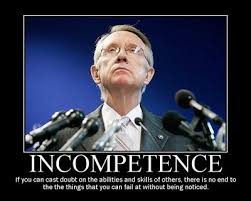

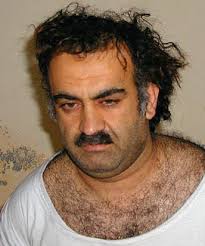
 After watching Bill Belichick decide to go for it on 4th down last night and subsequently loosing to the Colts I thought I had witnessed the dumbest decision that a human could make in quite a while. However, his decision really harmed no one. I am afraid that the decision to send Khalid Sheikh Mohammed to NYC to stand trial may.
 Ok thousands of people write the BOSMOS headquarters and ask me what political party I am part of. I just spoke with a lady who said that I was " a moving target..." I hear that my views are not cogent or consistent. I would submit they are VERY consistent and that is what bothers people. I try not to think in terms of party platforms but on the basis of what I believe is the best for our nation. I am called a bleeding heart liberal and war mongering conservative very frequently. Truth be told I am a registered republican.






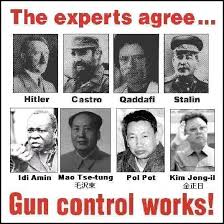 My vast pool of readers know that I lean toward the right side politically. I am one of those guys whose liberal friends think I am a right wing nut and my conservative friends believe that I have drank the "progressive" Kool Aid.
 Over the last several years many things have changed for the Imus fan. He has been on three TV channels, been fired for nothing more than political correctness and started and maintained a working cattle ranch for kids with cancer.

 I saw a story on the news about a week ago for this product. The story was a business story but I bought some of this Kefir. I had heard about Probiotics before but had never tried this stuff before. Let me just say it is great. My kids love it!





 Alleged Nazi death camp guard John Demjanjuk has avoided immediate deportation to stand trial for being an accessory to 29,000 killings at the Sobibor death camp in Poland during WWII. In simple terms he is accused of being a Nazi goon.



 Oh please God help the Chiefs play like a real NFL team!


